Captain Multiplier Math — When 2× Pays Off and When 1.5× Wins
A worked scorecard showing exactly when a 2× captain pays off and when the safer 1.5× vice-captain selection wins.
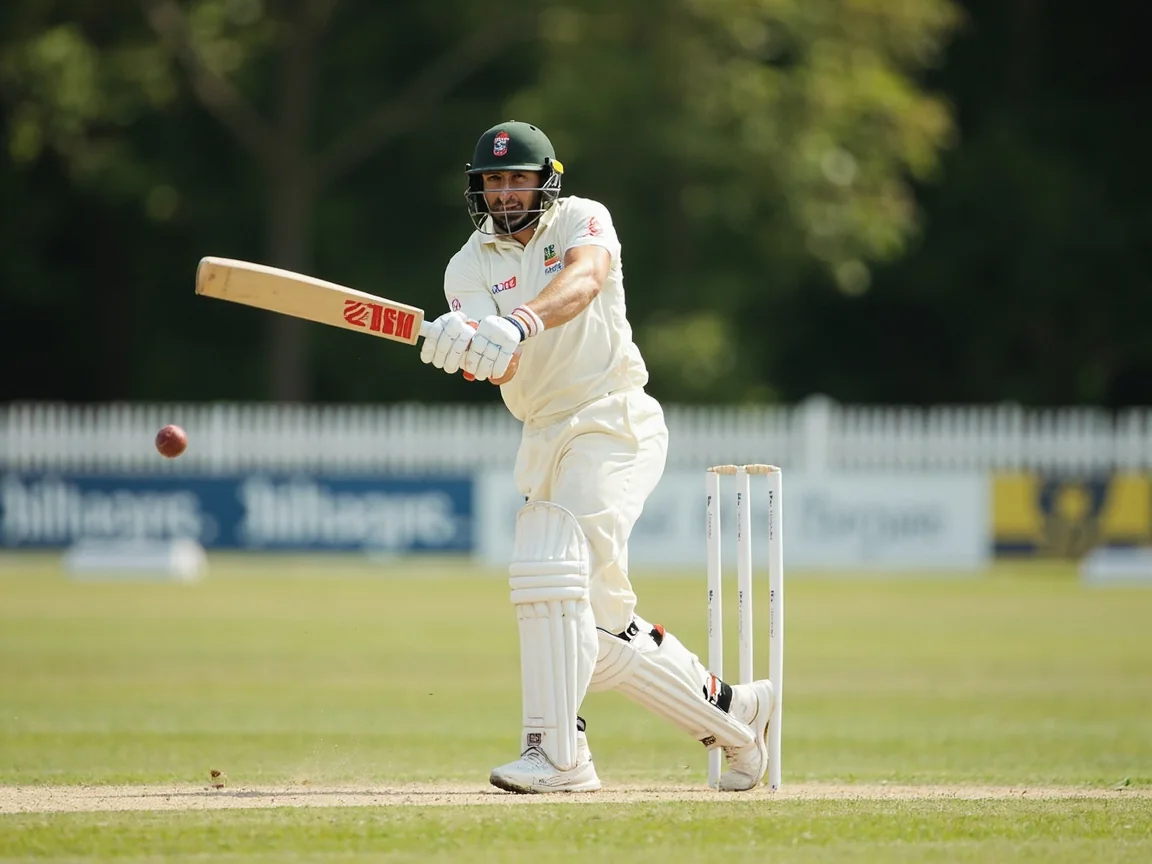
The two multipliers that decide most contests
Captain 2× and vice-captain 1.5× together account for 30-40% of your final score on most fantasy platforms. The math is simple but the application requires careful thought.
This guide shows the exact math, with worked examples that make the right choice obvious in hindsight.
The math
For a captain scoring X and vice-captain scoring Y, your effective points from those two players are 2X + 1.5Y.
The math is invariant — what changes is the relative confidence in X vs Y. If you are more confident in X being high, the captain choice pays off more. If you are equally confident in both, the conventional 2X captain choice still wins because 2X > 1.5X.
Worked example A — captain wins big
Player A (captain): 75 runs. Player B (vice): 35 runs. Effective: 2×75 + 1.5×35 = 150 + 52.5 = 202.5.
Alternative scenario where A scores 75 and B scores 25: 2×75 + 1.5×25 = 150 + 37.5 = 187.5. The captain choice matters because B's contribution is reduced.
Worked example B — captain choice backfires
Player A (captain): 15 runs. Player B (vice): 60 runs. Effective: 2×15 + 1.5×60 = 30 + 90 = 120.
Alternative scenario with B as captain and A as vice: 2×60 + 1.5×15 = 120 + 22.5 = 142.5. The original choice cost you 22.5 points.
The lesson
The captain pick should be the player you are most confident in scoring well — not necessarily the "best" player in form. A 70% confidence captain will outperform a 50% confidence captain pick in expectation.
How to apply this to your picks
For each contest, list the 5-7 candidates for captain and vice-captain. For each, estimate a confidence interval (e.g. "60% chance of 50+ runs"). Compute the expected effective points for each captain-vice combination.
Pick the combination that maximises expected effective points. Where two combinations are close, pick the lower-variance option (smaller contests) or higher-variance option (larger contests) per your contest strategy.
Reading your live score during the match
How to interpret the score updates as they happen.
Most platforms update scores live as events occur. The captain's 2× multiplier is applied instantly to each scoring event. Boundary bonuses (4 pts) and six bonuses (6 pts) are added on top of the run value. Milestone bonuses (30 / 50 / 100 runs) are credited once when the milestone is reached.
Useful habit: check the score at the end of each over. This 1-2 minute habit gives you a real-time sense of how the match is unfolding and whether your captain pick is paying off.
At the 10-over mark (powerplay + first middle-overs phase), you should have a clear signal of whether your captain is on track. By the 15-over mark, the captain's final contribution is largely locked in.
Pair with the scoring reference
The full scoring reference is on the Points System page. The captain-multiplier math is just one piece of the larger scoring decision.
Why this topic matters for adult fantasy-cricket readers
How this page fits into the desk's broader coverage and where it connects to other guides.
Fantasy cricket is a knowledge-intensive hobby. The desk's role is to surface verified information that helps readers make their own decisions — not to promise outcomes or push a single strategy. Each page on the desk is a building block in the larger editorial coverage of the topic.
This page in particular addresses one specific aspect of the broader topic. The desk recommends pairing it with the related coverage linked at the bottom of the page. The pairing gives readers both the narrow (this page) and the broader (the related hubs) view.
Editorial pages are not marketing pages. The desk labels unverifiable claims as such, refreshes time-sensitive facts on a 14-day cycle, and logs corrections visibly. If a fact looks out of date, the desk wants to know — send a note to the customer-care channel.
How the editorial team keeps this page current
The verification cycle and what triggers an update.
14-day refresh cycle
Time-sensitive pages (state eligibility, app version, withdrawal timelines, bonus offers) are re-checked every 14 days. The last-reviewed date at the top of the page reflects the latest cycle.
30-day refresh cycle
Reference material (glossary terms, scoring rules, role definitions) is re-checked every 30 days. Material changes are logged visibly; minor copy edits are not.
Triggered updates
If the operator announces a material change (new app version, scoring rule update, state eligibility change), the desk updates the affected pages within 48 hours of the announcement.
Reader-driven updates
Reader notes sent to the customer-care channel are read and triaged. If a note flags a discrepancy that the desk can confirm against first-party sources, the desk updates the page and credits the note (if requested).
Correction log
Material corrections are logged at the top of the affected page with the date and the change. Silent corrections are not used — if the date is silent, the correction did not happen.
Editorial verdict independence
The desk's editorial verdicts (the review, the captain framework, the venue notes) are independent of the operator's commercial interests. Where the desk disagrees with operator marketing claims, the disagreement is stated with reasoning.
Editorial framework — how the desk thinks about this topic
The structure that holds the coverage together across the desk's pages.
The editorial desk organises its coverage around a four-stage reader workflow: awareness, evaluation, decision, and review. Each page on the desk targets one stage.
The awareness stage introduces the topic — what it is, why it matters, and what readers need to know first. The evaluation stage compares options and surfaces decision criteria. The decision stage walks through the specific steps. The review stage covers post-action learning.
This page sits in the awareness and decision stages for its topic. The related coverage linked at the bottom of the page covers the evaluation and review stages. Together they form a complete picture.
The framework is intentionally simple. Fantasy cricket is entertainment with a budget; readers benefit from clear, structured information more than from clever analysis. The desk keeps the structure visible so readers can navigate the coverage efficiently.
Related coverage on the desk
Three pages that pair naturally with this one.
How to Play
The complete workflow from app install to your first paid contest — contest selection, team creation, captain choice.
Open hub REFERENCEPoints System
Every scoring event, captain multiplier, deduction and abandoned-match handling in one readable reference.
Open hub SAFETYResponsible Play
Limits, self-exclusion, recognising warning signs, and where to find help in your state.
Open hubReader questions the desk has logged
Common questions on this topic, drawn from reader notes and search queries.
Where does the information come from?
The desk's primary sources are first-party — the operator's website, store listings, official app metadata, public corporate filings. Secondary sources are used for cross-verification. Where the desk cannot independently verify a claim, it is labelled as such.
Is the desk affiliated with the platform?
The desk is an independent editorial team. Where affiliate links are present (to the platform's app or to a related service), the desk discloses the commercial relationship on the affected page.
Does the desk have a mobile app?
The desk is a web-based publication. It works on desktop and mobile browsers. There is no separate mobile app for the editorial coverage.
Can I subscribe to updates?
The desk does not currently run an email subscription. Bookmark the predictions desk and the home page for daily coverage updates.
How do I report a fact that looks wrong?
Send a note to the customer-care channel with the page URL and the discrepancy. The desk reads every note.
Does the desk accept guest contributions?
The desk does not currently publish guest contributions. Coverage is produced by the small in-house editorial team.