Toss-Decision Framework — A 4-Question Checklist That Survives Any Format
Chase or bowl first? The decision depends on the venue, not the format. This 4-question framework produces a recommendation for every match.
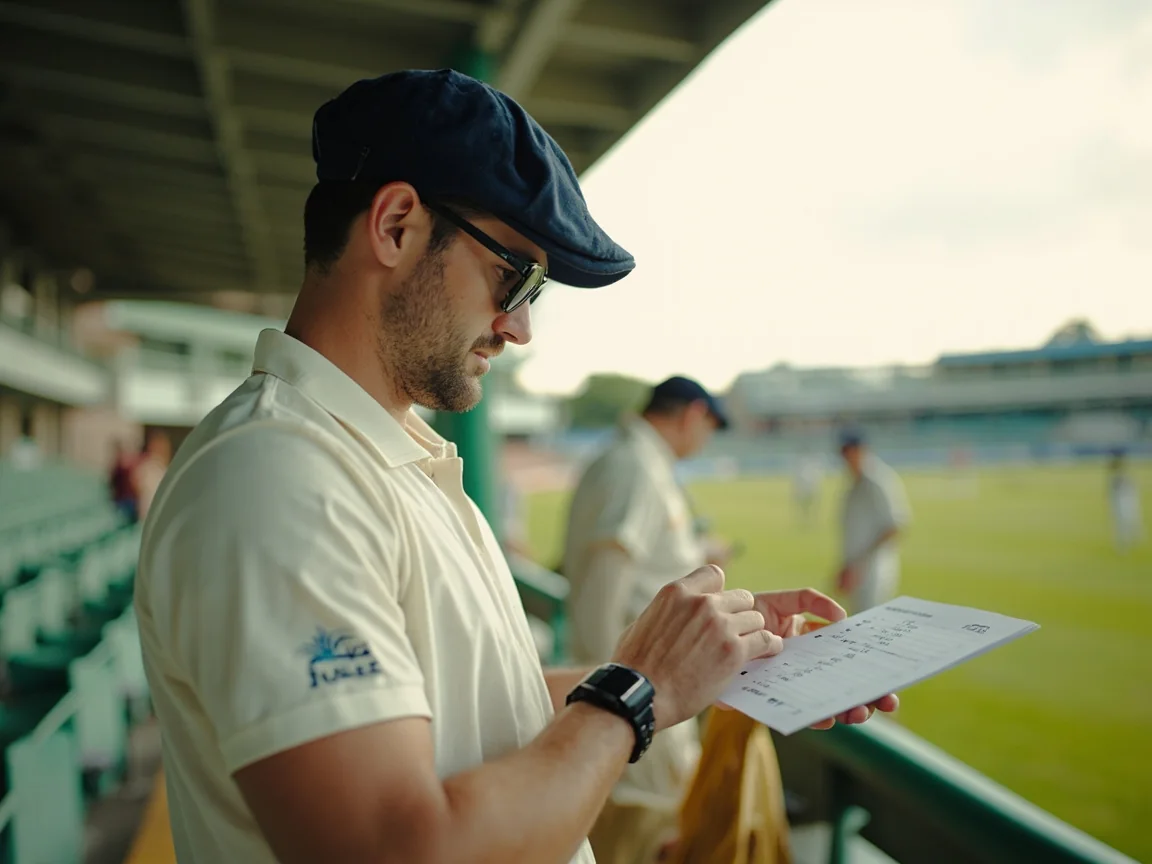
Why venue matters more than format
Most toss-decision advice focuses on "chase in T20, bat in Test" — but this is wrong. The decision depends on the venue's chasing trend, not the format. A venue that favours chasing in T20 also favours chasing in ODI; the format-specific advice masks the underlying pattern.
This guide walks through the 4 questions that produce a recommendation for any match.
The 4 questions
Question 1 — What is the venue's chasing trend?
Look at the last 10 matches at the venue. If the team batting second has won more than half, chase is the historical winner. If first-batting teams win more, defend.
Question 2 — What is the dew forecast?
Dew makes the second-innings pitch slower for bowlers (less grip) and the ball slicker for batsmen (more runs). Where dew is forecast, chase is favoured.
Question 3 — How does the pitch behave across an innings?
Pitches that turn or slow significantly across 20 overs (typical in subcontinental day games) favour chasing. Flat batting tracks with consistent bounce favour defending a total.
Question 4 — Is this a knockout or a group match?
Knockout matches often see captains prefer to chase (so they know the target). Group matches see more variation. Adjust your captain pick signal accordingly.
Decision matrix
| Venue trend | Dew forecast | Pitch behaviour | Recommendation |
|---|---|---|---|
| Chasing favoured | Yes | Slows | Strong chase |
| Chasing favoured | No | Flat | Lean chase |
| Defending favoured | No | Flat | Strong defend |
| Defending favoured | Yes | Slows | Lean defend (dew overrides trend) |
| Mixed (50/50) | Yes | Slows | Lean chase |
| Mixed (50/50) | No | Flat | Toss winner's choice — coin flip |
When to override the framework
The desk's exceptions to the rule.
Three situations where the desk overrides the standard framework: (1) knockout matches where the captain prefers to chase and signals intent at toss, (2) matches with extreme dew where the toss decision is effectively decided before the captains walk out, and (3) matches where the team's strength is clearly batting-first (or batting-second) regardless of venue.
For knockout matches, the captain's stated preference is itself a signal — they have information you don't. Treat the toss-time announcement as part of the captain pick signal.
For extreme dew matches, the toss decision matters less because both teams face similar conditions. The captain pick should lean slightly toward the team batting second (slightly easier chase) but the effect is small.
For matches with extreme batting / bowling asymmetry, the team better suited to the conditions wins regardless of toss. The captain pick should reflect this asymmetry.
Apply to today's matches
The predictions desk uses this framework for every match in its daily coverage. Updated with venue notes and dew forecasts.
Why this topic matters for adult fantasy-cricket readers
How this page fits into the desk's broader coverage and where it connects to other guides.
Fantasy cricket is a knowledge-intensive hobby. The desk's role is to surface verified information that helps readers make their own decisions — not to promise outcomes or push a single strategy. Each page on the desk is a building block in the larger editorial coverage of the topic.
This page in particular addresses one specific aspect of the broader topic. The desk recommends pairing it with the related coverage linked at the bottom of the page. The pairing gives readers both the narrow (this page) and the broader (the related hubs) view.
Editorial pages are not marketing pages. The desk labels unverifiable claims as such, refreshes time-sensitive facts on a 14-day cycle, and logs corrections visibly. If a fact looks out of date, the desk wants to know — send a note to the customer-care channel.
How the editorial team keeps this page current
The verification cycle and what triggers an update.
14-day refresh cycle
Time-sensitive pages (state eligibility, app version, withdrawal timelines, bonus offers) are re-checked every 14 days. The last-reviewed date at the top of the page reflects the latest cycle.
30-day refresh cycle
Reference material (glossary terms, scoring rules, role definitions) is re-checked every 30 days. Material changes are logged visibly; minor copy edits are not.
Triggered updates
If the operator announces a material change (new app version, scoring rule update, state eligibility change), the desk updates the affected pages within 48 hours of the announcement.
Reader-driven updates
Reader notes sent to the customer-care channel are read and triaged. If a note flags a discrepancy that the desk can confirm against first-party sources, the desk updates the page and credits the note (if requested).
Correction log
Material corrections are logged at the top of the affected page with the date and the change. Silent corrections are not used — if the date is silent, the correction did not happen.
Editorial verdict independence
The desk's editorial verdicts (the review, the captain framework, the venue notes) are independent of the operator's commercial interests. Where the desk disagrees with operator marketing claims, the disagreement is stated with reasoning.
Editorial framework — how the desk thinks about this topic
The structure that holds the coverage together across the desk's pages.
The editorial desk organises its coverage around a four-stage reader workflow: awareness, evaluation, decision, and review. Each page on the desk targets one stage.
The awareness stage introduces the topic — what it is, why it matters, and what readers need to know first. The evaluation stage compares options and surfaces decision criteria. The decision stage walks through the specific steps. The review stage covers post-action learning.
This page sits in the awareness and decision stages for its topic. The related coverage linked at the bottom of the page covers the evaluation and review stages. Together they form a complete picture.
The framework is intentionally simple. Fantasy cricket is entertainment with a budget; readers benefit from clear, structured information more than from clever analysis. The desk keeps the structure visible so readers can navigate the coverage efficiently.
Related coverage on the desk
Three pages that pair naturally with this one.
How to Play
The complete workflow from app install to your first paid contest — contest selection, team creation, captain choice.
Open hub REFERENCEPoints System
Every scoring event, captain multiplier, deduction and abandoned-match handling in one readable reference.
Open hub SAFETYResponsible Play
Limits, self-exclusion, recognising warning signs, and where to find help in your state.
Open hubReader questions the desk has logged
Common questions on this topic, drawn from reader notes and search queries.
Where does the information come from?
The desk's primary sources are first-party — the operator's website, store listings, official app metadata, public corporate filings. Secondary sources are used for cross-verification. Where the desk cannot independently verify a claim, it is labelled as such.
Is the desk affiliated with the platform?
The desk is an independent editorial team. Where affiliate links are present (to the platform's app or to a related service), the desk discloses the commercial relationship on the affected page.
Does the desk have a mobile app?
The desk is a web-based publication. It works on desktop and mobile browsers. There is no separate mobile app for the editorial coverage.
Can I subscribe to updates?
The desk does not currently run an email subscription. Bookmark the predictions desk and the home page for daily coverage updates.
How do I report a fact that looks wrong?
Send a note to the customer-care channel with the page URL and the discrepancy. The desk reads every note.
Does the desk accept guest contributions?
The desk does not currently publish guest contributions. Coverage is produced by the small in-house editorial team.
Editorial perspective on this topic
Where the desk's coverage stands on the spectrum of opinion.
The desk's editorial perspective on fantasy cricket is informed by three principles. First, fantasy is entertainment with a budget — readers should treat winnings as a surprise rather than an expectation. Second, verified information matters more than marketing claims — readers deserve to know what is true, what is operator-claimed, and what is not independently verified. Third, long-term edge comes from compounding small insights over many contests — not from a single contest bet.
Where this page's coverage aligns with the operator's published material, the alignment is noted. Where the desk's view differs, the disagreement is stated with reasoning. The desk does not soften disagreements to please the operator; nor does it manufacture disagreements to seem independent.
The desk's coverage on this topic will continue to evolve as the operator updates the platform and as readers send in corrections and questions. The "last reviewed" date at the top of the page is the best signal of currency.